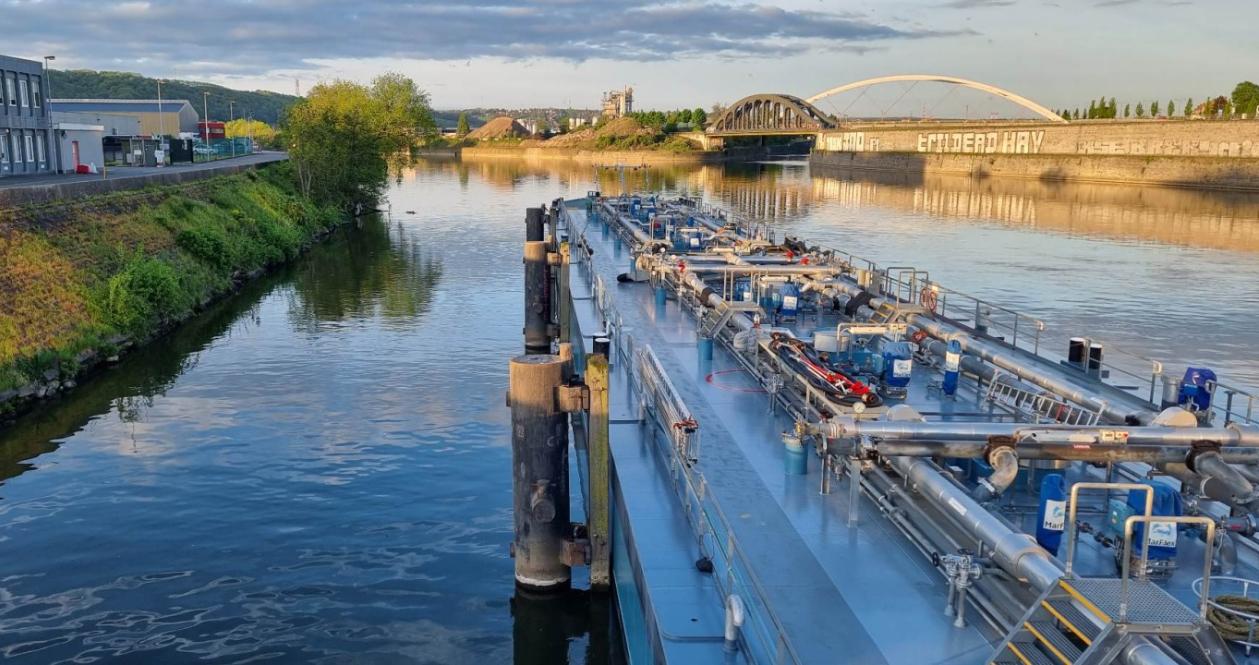
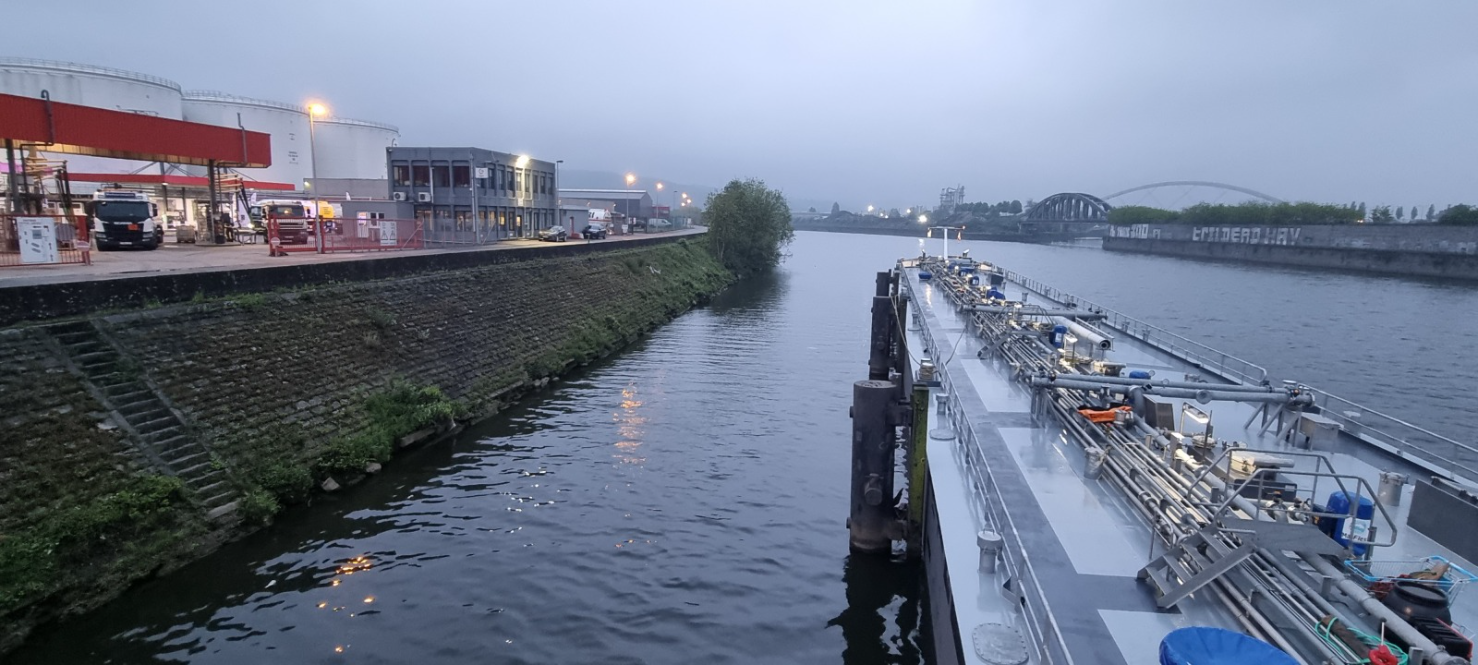
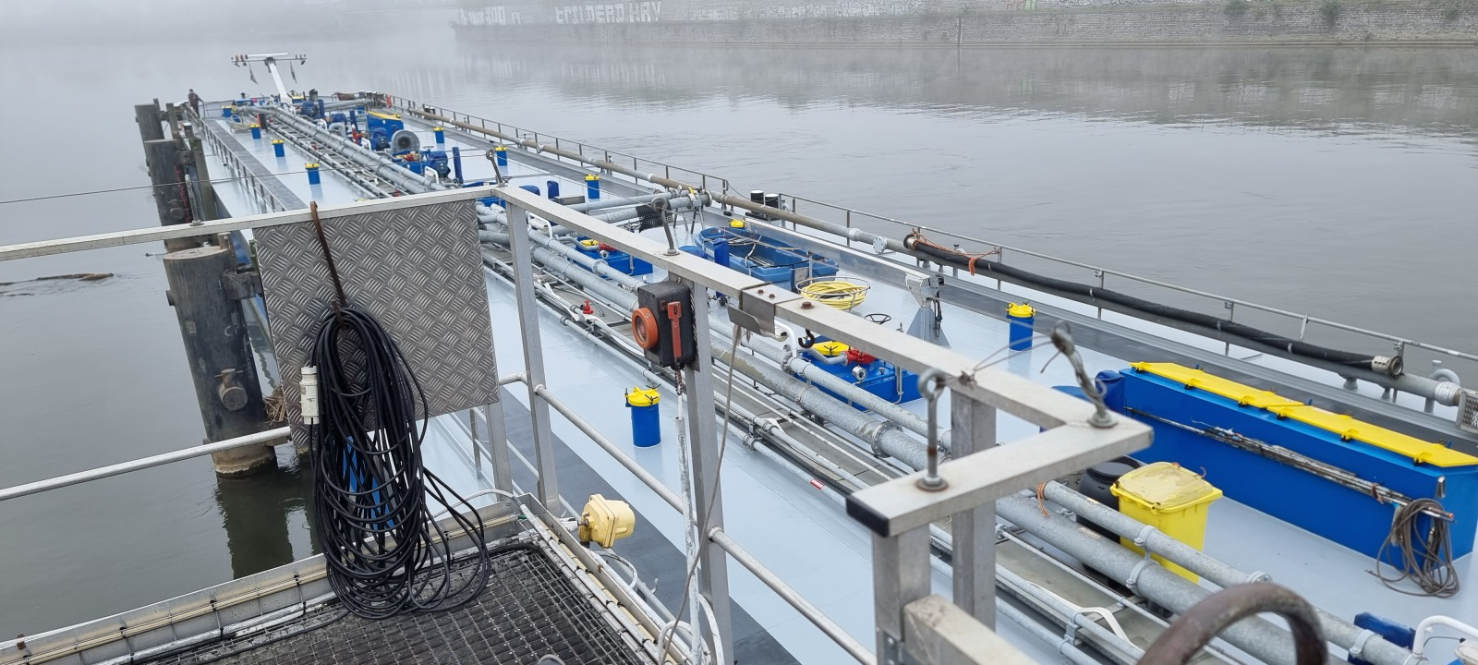
As a result, Liege Airport is working to decarbonize its operations and strengthen its multimodal logistics: kerosene will now be transported by barge (instead of by truck). This is a win for both mobility and the local economy, as the contract was awarded to Gilops Group—now part of the Uhoda Group—which operates at the Wandre oil terminal.
Liège Airport is taking a new step toward reducing its environmental impact by diversifying its fuel supply methods. From now on, a significant portion of the kerosene used for flight operations will be transported by barge via the river network, in addition to transport by pipeline and truck.
This logistical decision is part of the airport’s multimodal strategy and aims to make its operations more efficient and sustainable. The use of waterways will notably lead to a significant reduction in the number of trucks on the roads, with the equivalent of 1,300,000 fewer kilometers traveled—an 82% reduction in truck mileage. This development also helps reduce CO₂ emissions, noise pollution, and traffic congestion in the region.
“We are extremely proud of this initiative, which combines operational performance, environmental responsibility, and support for the local economy,” says Laurent Jossart, CEO of Liege Airport, adding: “We are advancing our multimodal strategy because, following our acquisition of a stake in Liege Logistics Intermodal for rail freight transport, this river transport project perfectly illustrates how logistics innovation can contribute to a more sustainable future, while leveraging the expertise of a local leader in its field, Gilops Group. Multimodality is the future of airport logistics.”
To implement this project, Liege Airport is partnering with Gilops Group, a family-owned company based in the Wandre oil port. This site, ideally located between the E25 highway and the Meuse River, offers significant storage capacity and a direct connection to the refineries in Antwerp and Rotterdam via the Albert Canal.
The partnership initially involves the provision of a 4,500 m³ tank dedicated to supplying the airport, with the possibility of adding a second one in the future. Investments will also be made to bring the facilities up to international JIG standards for aviation fuel.
In addition, Liege Airport acts as a service provider for oil companies: the airport coordinates fuel transportation, storage, and loading onto aircraft (Jet A1) via tanker trucks or an underground hydrant network, depending on the airport zone.
In response to growing air traffic and development prospects, the airport also plans to increase its on-site storage capacity by constructing two new 2,270 m³ tanks, bringing the total capacity to 11,580 m³—a 45% increase.